March 12, 2026
Jakarta, March 12, 2026. PT Indonesia Kendaraan Terminal Tbk (IDX: IPCC) remains consistently committed to its shareholders and service users through sustainable operational performance growth. This is reflected in the consolidated vessel call volume of 593 calls, an increase of 111 calls year-on-year (YoY), equivalent to 23.06% growth. Furthermore, the most notable growth was seen in the Truck/Bus cargo segment, which recorded a 50.61% YoY increase, or 17,062 units compared to the previous period. Overall, the consolidated operational performance of the vehicle terminal, which includes CBU, heavy equipment, and Truck/Bus, grew by 13.53%, reflecting a positive trend in the company's vehicle terminal service activities.
This improvement is supported by the strengthening of the digital-based operational system through the implementation of PTOS-C, which is an integrated platform for managing international and domestic terminal operations. The implementation of this system plays a crucial role in increasing service effectiveness, accelerating operational processes, and providing better visibility for service users. The company's digital transformation is also part of its ongoing strategy to strengthen the operational performance of its vehicle terminals. "Digital transformation through the implementation of PTOS-C is an important part of our strategy to build a more integrated, efficient, and transparent vehicle terminal operational system. By strengthening this digital platform, we are not only improving the quality of service for service users but also ensuring that IPCC is able to deliver adaptive, reliable, and sustainable operations amidst the ever-evolving dynamics of the automotive logistics industry," said Sugeng Mulyadi, CEO of IPCC.
The growth in vehicle export activity has also been a driving force in strengthening the operational performance of PT Indonesia Kendaraan Terminal Tbk (IPCC), particularly in the Completely Built Up (CBU) cargo segment. As of February 2026, the company recorded the handling of 62,630 CBU units, an increase of approximately 35% year-on-year (YoY). This achievement also confirms Indonesia's increasingly strong position as one of the automotive industry production bases that has gained the trust of the global market, with Vietnam recorded as the largest export destination country during that period, reaching 11,672 vehicles. Overall, in the consolidated CBU cargo segment, IPCC successfully served 139,480 vehicles, an increase of 5,895 units or a growth of approximately 4.41% YoY. This growth indicates a stable and sustainable upward trend in the vehicle terminal service activities managed by the company.
This positive performance is also reflected in IPCC's operational achievements during the first two months of 2026, which on a consolidated basis successfully handled 195,729 units of vehicle cargo, consisting of CBU, trucks/buses, and heavy equipment. This number increased by 23,319 units compared to the same period in the previous year, reflecting the continued growth of automotive logistics activities. "The increase in operational performance at the beginning of this year reflects the effectiveness of our consistent implementation of the vehicle terminal management strategy. Growth in the CBU segment and the increase in consolidated cargo volume indicate that automotive logistics activities remain positive, while strengthening IPCC's role in supporting the smooth distribution of vehicles for both the domestic and export markets," said Bagus Dwipoyono, IPCC's Director of Operations and Engineering.
As part of the Pelindo Group ecosystem under the management of Sub Holding Multi Terminal or PT Pelindo Multi Terminal (SPMT), IPCC plays a strategic role in managing vehicle terminals focused on non-containerized or multipurpose cargo services. This role is becoming increasingly important amidst international geopolitical dynamics and changing national policies that influence the global trade and logistics landscape. In facing these conditions, IPCC continues to strengthen operational capabilities and maintain performance consistency to meet shareholder expectations while maintaining its contribution to the growth of the national automotive logistics industry throughout 2026.
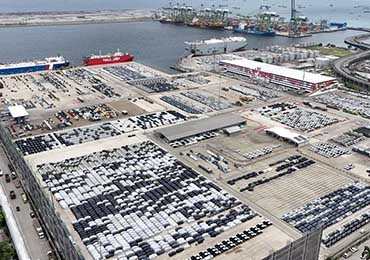
In an effort to strengthen service quality and meet the needs of the ever-growing industry, IPCC consistently strengthens its operational lines by standardizing five satellite terminals. This demonstrates the company's commitment to providing more equitable, adaptive, and efficient vehicle terminal services, supported by an integrated, digital-based operational system. This step also drives operational performance improvements across various service segments. In truck and bus cargo services, IPCC recorded the most significant growth of 50.61% year-on-year (YoY), in line with increased activity in the domestic mining sector driven by the implementation of the downstream mineral resources industry policy. Meanwhile, government programs through the Ministry of Agriculture of the Republic of Indonesia that focus on strengthening food self-sufficiency—through increased agricultural productivity, development of new rice fields, and downstreaming the agricultural sector—also contribute to increasing the need for production equipment and transportation facilities, the distribution of which is served through vehicle terminals managed by IPCC.
In line with the company's strengthening role in supporting a sustainable national industrial supply chain, heavy equipment cargo services also recorded positive performance and became the second-largest contributor to the company's operational activities. As of February 2026, consolidated heavy equipment handling reached 5,477 units, a 7.08% year-on-year increase, or 362 units more than the same period the previous year. This achievement also reflects the IPCC's contribution to supporting the development of a downstream ecosystem in the mining sector, a key government strategic agenda. "The growth in operational performance across various service segments demonstrates that IPCC's business development initiatives are able to respond adaptively to the dynamics of industry needs. By strengthening its terminal network, optimizing its integrated operational system, and implementing good corporate governance principles, we are optimistic that IPCC can continue to create sustainable added value while making a real contribution to supporting an increasingly competitive national industrial supply chain," said Endah Dwi Liesly, IPCC Corporate Secretary.
IPCC-Integrated Auto Solutions
IPCC, Leading to be The World Class Car Terminal Ecosystem
#IPCCTerminalKendaraan #IPCCintegratedautosolutions
#PelindoGroup #IndonesiaMaritimeGateway
-- end --